

What is Social Procurement?

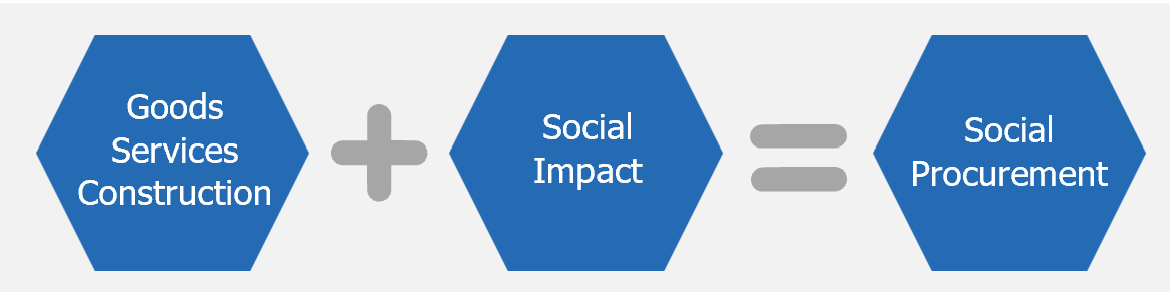
Social procurement is the intentional generation of social value through procurement processes. It occurs when organisations buying a good or service or delivering works choose to purchase a social outcome - over and above the products or services required.
Definitions vary considerably across different jurisdictions and sectors, but the intent is broadly the same. To use strategic procurement practice, enabled by an effective social procurement ecosystem, to deliver positive social, environmental and local economic outcomes, with a key focus on addressing the needs of our most vulnerable communities.
Australian Spatial Analytics (ASA) is a business that provides geospatial mapping services at the same price and quality as other suppliers.
ASA also employs almost 20 people with Autism out of a staff of 50.
The social outcomes delivered by ASA are huge, by procuring from ASA and incentivising social outcomes it sends a message to others in the field to look at what they can do for people with barriers to employment.
Social procurement can take many forms, which can be grouped into direct and indirect approaches
Direct approaches involve purchasing from for-social-benefit entities, such as: social enterprises, Australian Disability Enterprises, and Aboriginal-owned businesses.
Indirect approaches involve using the tendering process and clauses in contracts with the private sector to seek social and sustainable outcomes. (e.g. employment targets for long-term unemployed)